Arden
Cottage Garden Curb Appeal That Stops Traffic
A front-yard cottage garden replaces a boring lawn with a flower-filled welcome that delights passersby and pollinators alike.
High
full-sun
Medium
Why It Works
Cottage gardens were originally the front gardens of English cottages — welcoming visitors with a riot of flowers along the path to the door. That same warm, inviting energy translates perfectly to a modern front yard. The style replaces monotonous lawn with biodiversity, provides year-round curb appeal through staggered bloom times, and creates a sense of home that manicured hedges never quite achieve.
Best for
- front yards where entry path, foundation planting, and low maintenance from the street are the real constraints
- people committing to layered perennials, soft edges, succession bloom
- people who will water through establishment season
Skip if
- you will not check curb view and sidewalk heat before buying plants
- you want one mow-and-done lawn with zero flowering maintenance
Common mistakes
For a cottage front yard, the usual miss is no structure plants so winter looks empty and summer is a tangle. People also ignore curb view and sidewalk heat and end up with tall screening that blocks windows and the front door. Names like lavender, rose, boxwood only work when massed with intent — not one of each from the nursery cart.
Plan this first
Lock the walk to the door and the height at the windows before any statement plant. Sketch a path and one seating pocket, then plant in drifts of 3–5. Preview that massing in Arden from the main viewing angle before you buy lavender, rose, boxwood.
How to Create This Garden
- 01
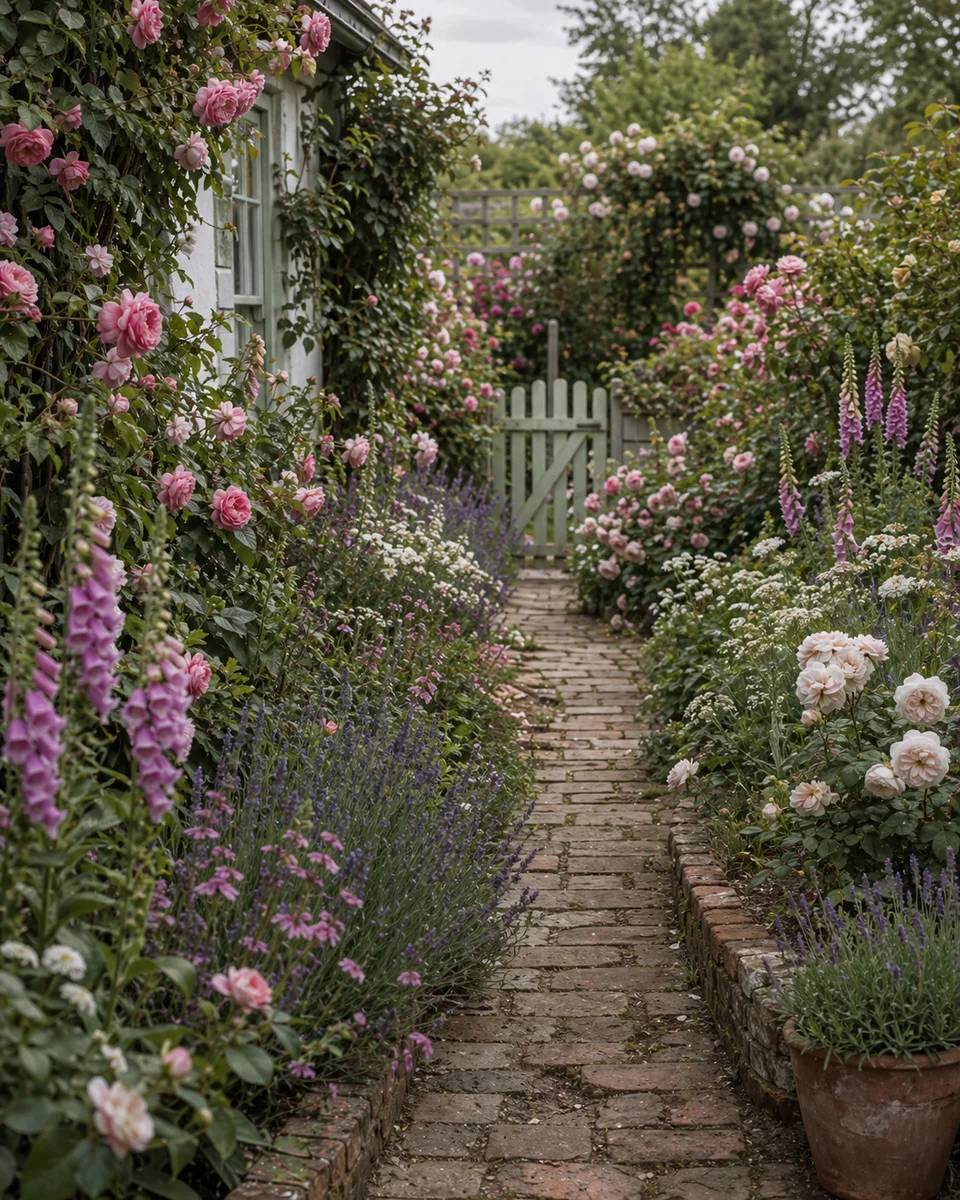
Map a curved flagstone or brick path from the sidewalk to the front door with a generous 3-foot width.
- 02
Frame the path with low edging plants like catmint and geranium that spill softly without obstructing.
- 03
Plant hollyhocks and climbing roses against the house wall for height and color.
- 04
Add window boxes and a mail-box planter for layered charm visible from the street.
- 05
Mulch beds with 2 inches of aged compost to retain moisture and suppress weeds.
Planting & layout notes
Install a low white picket or woven-willow fence along the property line. Create a brick or flagstone path from the gate to the front door, curving gently. Plant mixed borders on both sides: roses, peonies, and delphiniums for structure; lavender, catmint, and salvias for fragrance and color; hollyhocks and foxgloves at the back for vertical drama. Add a rose-covered arch over the gate. Interplant with spring bulbs (tulips, alliums, daffodils) for early color. Edge beds with low boxwood or germander hedging for winter structure.
Try It with AI
Photograph your front yard from the street and Arden will transform it into a cottage-garden paradise on screen. Test fence styles, path materials, and color schemes — see how pink-dominant or cool-blue palettes look against your home before you plant a single bulb.
“I showed my landscaper the preview and we agreed on a plan in one meeting instead of three.”
Frequently Asked Questions
01 Will a cottage garden front yard look messy?
Not if you maintain structure. A clipped low hedge or fence, defined path, and repeated plant groupings create order within the abundance. Deadheading and edge-trimming keep things from looking neglected.
02 How do I handle the path to my front door?
A gently curving brick or stone path 3–4 feet wide gives room for plants to spill over edges without blocking foot traffic. Set the path slightly raised or edged with stone to keep soil off the walkway.
03 What if my front yard gets less than six hours of sun?
Swap sun-loving roses for shade-tolerant hydrangeas, hostas, astilbe, and digitalis. The cottage-garden layered look works beautifully in part shade with the right plant selection.