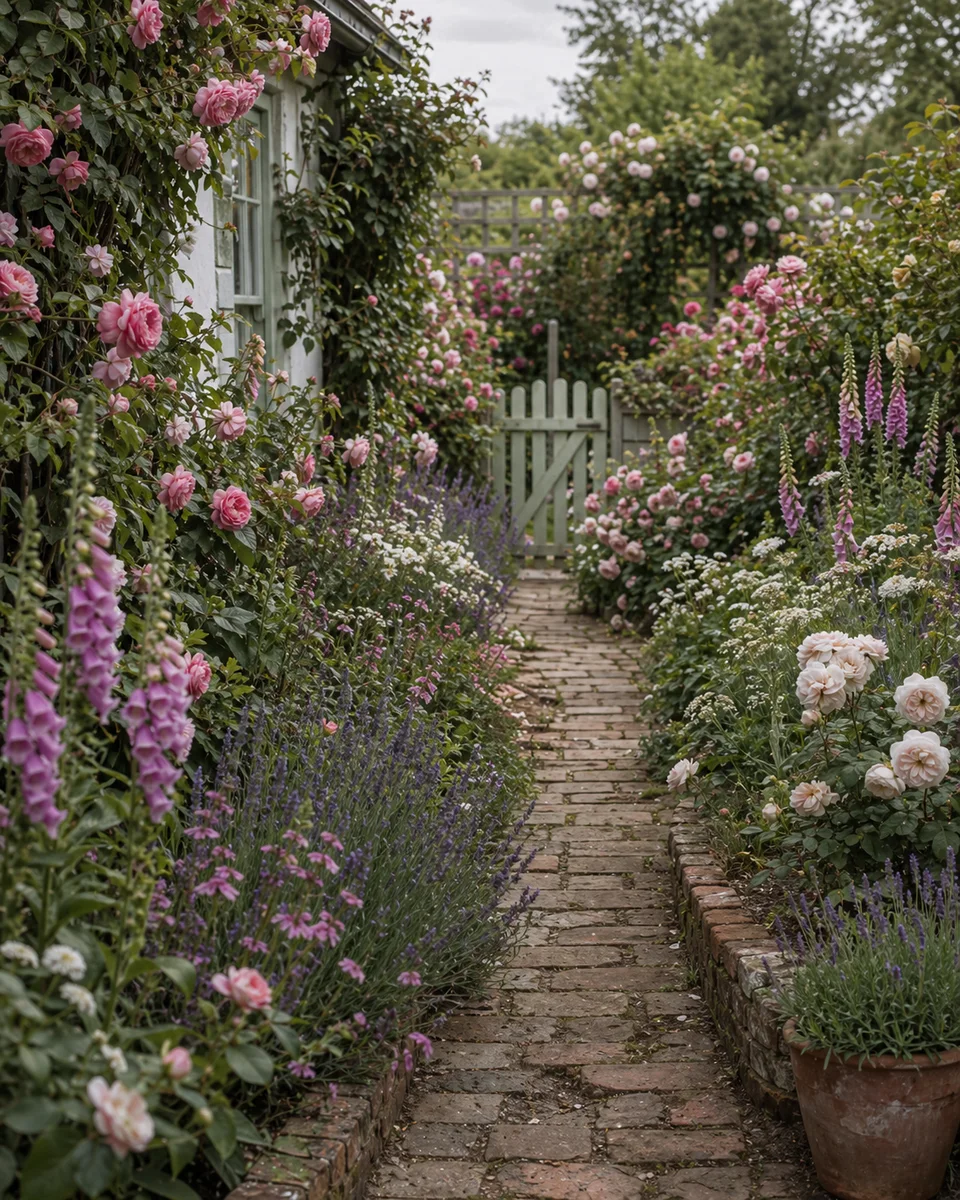
USDA Zone 5b: The Warmer Half of Zone 5
Minimum winter temperatures: −15°F to −10°F (−26.1°C to −23.3°C)
USDA Zone 5b is the warmer published half of Zone 5 on the 2023 Plant Hardiness Zone Map. Per USDA ARS and PRISM’s 1991–2020 average annual extreme minimum temperature bands, 5b covers −15°F to −10°F (−26.1°C to −23.3°C) — still inside the whole-number Zone 5 tag, but milder than 5a for the shrubs the Zone 5 page already calls marginal in the colder pockets. It is not Zone 6. Zone 6a’s published floor is −10°F to −5°F. Peonies, spring bulbs, panicle hydrangea, lilac, and the rest of the Zone 5 palette still apply, including hybrid tea roses that need the winter protection the Zone 5 page already describes. Half-zone lines are mapped products, not Arden guesses. University of Wisconsin–Madison Extension’s December 2023 note describes 5b as including Madison and areas around Lake Winnebago. That is one published example, not a city directory. Confirm your ZIP on planthardiness.ars.usda.gov before you copy a neighbor’s “Zone 5” calendar.
Related USDA zones
Half-zone temperatures come from the 2023 USDA Plant Hardiness Zone Map (ARS / PRISM). Confirm your ZIP on the official map before treating city averages as gospel.
Typical regions
Warmer mapped cells inside Zone 5. State guides on this site that already list 5b include California, New York, Illinois, Michigan, Arizona, Washington, Colorado, Oregon, Pennsylvania, Ohio, North Carolina, and Virginia. University of Wisconsin–Madison Extension (December 2023) describes 5b at Madison and around Lake Winnebago. Verify the USDA map for your address — a state span is not your parcel.
Challenges & solutions
- 01
Reading 5b as Zone 6
5b’s floor is −15°F to −10°F, not the −10°F to −5°F Zone 6a band. Plants rated only for Zone 6 still belong on a Zone 6 page. Use the Zone 6, 6a, or 6b guide only when the USDA map returns that band.
- 02
Marginal shrubs still need a check
The warmer half reduces how often butterfly bush and big-leaf hydrangea see the −20°F floor, compared with 5a. It does not cancel the Zone 5 note that big-leaf hydrangea needs winter protection for consistent bloom. Keep that protection on open sites.
- 03
Hybrid tea roses
The Zone 5 page already says hybrid teas need soil mounded over the graft or a rose cone, and that own-root roses are more forgiving. 5b does not retire that step. Knock Out, Drift, and most shrub roses stay the lower-protection choice.
- 04
Copying a 5a caution onto every 5b bed
5a mulch and wrap habits are for a −20°F floor. 5b’s published floor is five degrees warmer. Still mulch after the ground freezes, and still match last frost to your NOAA station. Do not invent a statewide tomato date from the letter b.
- 05
Clay and Japanese beetles, same as Zone 5
The five-degree warmer floor does not change summer. Keep the Zone 5 choices: raised beds in heavy clay, and hand-picking Japanese beetles into soapy water. Do not add a new spray program because the half-zone letter changed.
Seasonal guide
- spring
- April through May. Whole Zone 5 last frost is usually mid-April to mid-May. 5b leans toward the earlier end of that existing range. Use your NOAA station. Do not invent a single statewide tomato date from the half-zone letter. Wait for soil near 60°F before tomatoes, the same rule as the whole Zone 5 page.
- summer
- June through August. Warm and often humid. Peak perennial bloom still sits in July on the Zone 5 calendar. The half-zone difference is winter, not July.
- fall
- September into early November. First frost on the whole Zone 5 page is typically mid-October. Plant trees, shrubs, and spring bulbs in September–October, then mulch after the ground freezes.
- winter
- December through March. Milder than 5a, and still not Zone 6: the published average extreme minimum is −15°F to −10°F, not a night-by-night forecast and not a −10°F floor. Protect hybrid teas and big-leaf hydrangea the way the Zone 5 page already says. Prune dormant fruit in February–March.
Plants for zone 5b
24Hand-matched picks that survive −15°F to −10°F (−26.1°C to −23.3°C) winters.
- Lavender Lavandula angustifolia
Lavender is the iconic sun-loving Mediterranean perennial. Silvery foliage, purple flower spikes, and a fragrance that feels like summer afternoons in Provence. It thrives on neglect — too much water or shade is the fastest way to kill it.
Full sun Low - Hostas Hosta spp.
Hostas are the go-to shade perennial. Huge, textured leaves ranging from electric chartreuse to deep blue-green to variegated. Low-maintenance once established, and they come back bigger and better every year.
Part shade Moderate - Boxwood Buxus sempervirens
Boxwood is the backbone of formal gardens. Dense evergreen foliage that holds crisp shapes — hedges, parterres, topiaries, spheres. Slow-growing and expensive up front, but these shrubs can live a century with good care.
Part sun Moderate - Japanese Maple Acer palmatum
A Japanese maple is the quiet showstopper of any garden. Lacy, deeply cut leaves. Silhouettes that look deliberately sculpted. Fall color that ranges from fire-engine red to deep burgundy. One tree can anchor an entire landscape.
Part sun Moderate - Hydrangea Hydrangea macrophylla
Hydrangeas deliver oversized, soft flower heads in blues, pinks, purples, and whites. The famous color-shift trick — acidic soil for blue, alkaline for pink — still fascinates gardeners. Plant once, enjoy for decades.
Part sun High - Roses Rosa spp.
Modern disease-resistant roses have eliminated most of the old "rose-growing is hard" mythology. Knock Out and Drift series bloom all season with zero spraying. Traditional hybrid teas still reward gardeners willing to work for them.
Full sun Moderate - Ferns Various genera
Ferns bring texture and movement to shady spots where most other plants refuse. Unfurling fiddleheads in spring feel like watching evolution replay. Native species are nearly indestructible once established.
Part shade Moderate - Astilbe Astilbe x arendsii
Astilbe fills the summer gap in shade gardens with airy, feathery plumes in pink, red, white, and lavender. Deer and rabbit resistant. A foolproof companion for hostas and ferns.
Part shade High - Ornamental Grasses Various genera
Ornamental grasses add sound, movement, and four-season structure. Seed heads catch morning light. Winter silhouettes add interest when everything else has died back. Almost maintenance-free once established.
Full sun Low - Coneflower Echinacea purpurea
Coneflowers are drought-tolerant prairie natives that bloom for months. Pollinators swarm them. Seed heads feed finches in winter. Perfect for low-maintenance, ecologically friendly gardens.
Full sun Low - Black-Eyed Susan Rudbeckia fulgida
Black-eyed Susans are the reliable workhorse of the sunny border. Golden petals around dark chocolate centers. Blooms from midsummer until frost. Spreads gracefully without being invasive.
Full sun Low - Russian Sage Perovskia atriplicifolia
Russian sage creates a lavender-blue haze from mid-summer through fall. Silvery foliage, aromatic leaves, and airy bloom spikes. Completely drought-tolerant once established.
Full sun Low - Sage Salvia officinalis
Common sage is both a staple culinary herb and an attractive ornamental. Silver-green leaves, short purple bloom spikes, and a sharp, savory flavor for meats and stuffings. Lives 5+ years with good care.
Full sun Low - Thyme Thymus vulgaris
Thyme does double duty — culinary herb and tough groundcover. Creeping varieties spread between stepping stones, releasing fragrance when stepped on. Upright varieties fill herb beds.
Full sun Low - Climbing Roses Rosa climbing varieties
Climbing roses turn trellises, arbors, and walls into living cathedrals. Train horizontal canes to maximize bloom production. "Eden," "New Dawn," and "Zéphirine Drouhin" are time-tested classics.
Full sun Moderate - Clematis Clematis spp.
Clematis delivers the biggest, showiest blooms of any climbing vine. Different pruning groups bloom at different times — plant several for flowers spring through fall. The secret: "head in the sun, feet in the shade."
Full sun (roots shaded) Moderate - Heuchera (Coral Bells) Heuchera spp.
Heuchera is the foliage rock star of shade gardens. Modern cultivars come in lime, caramel, peach, burgundy, silver, and nearly black. Delicate bloom spikes add charm. Easy, evergreen in mild climates.
Part shade Moderate - Peonies Paeonia lactiflora
Peonies can live 100+ years in the same spot. Spectacular late-spring blooms in pink, white, red, and coral. Plant once, enjoy for generations. The key is getting the planting depth right — too deep and they'll never bloom.
Full sun Moderate - Daylilies Hemerocallis spp.
Daylilies are nearly indestructible. They bloom in sun or part shade, tolerate poor soil, resist deer, and multiply quickly. Thousands of cultivars in every color except blue.
Full sun to part shade Moderate - Tulips Tulipa spp.
Tulips open the spring garden with jewel-tone cups in every color imaginable. Plant bulbs in fall for April–May bloom. Most modern hybrids fade after 2–3 years — treat them like annuals or choose species tulips that return reliably.
Full sun Low - Daffodils Narcissus spp.
Daffodils are the most dependable spring bulb. Deer ignore them, squirrels won't dig them, and they multiply quietly year after year. Plant once in fall and enjoy for decades.
Full sun to part shade Low - Iris Iris germanica
Bearded iris deliver some of the most elaborate blooms in any garden — ruffled falls, upright standards, and fragrance in shades no paint can match. Plant rhizomes at the surface, not buried, for healthy long-lived clumps.
Full sun Low - Salvia Salvia nemorosa
Perennial salvias produce upright spikes of blue, purple, or pink that bees and hummingbirds find irresistible. Drought-tolerant, deer-resistant, and they bloom again after a hard cutback in mid-summer.
Full sun Low - Garden Phlox Phlox paniculata
Tall garden phlox delivers fragrant, mounded flower heads from mid-summer through fall. Classic cottage-garden plant. Modern mildew-resistant varieties like "David" and "Jeana" finally make phlox easy to grow well.
Full sun to part shade Moderate
Frequently Asked Questions
01 What temperatures define USDA Zone 5b?
On the 2023 USDA Plant Hardiness Zone Map, Zone 5b is the half-zone whose average annual extreme minimum temperature falls between −15°F and −10°F (−26.1°C to −23.3°C). Those bounds come from USDA ARS / PRISM — not from an Arden-estimated midpoint.
02 Is Zone 5b the same as Zone 6?
No. Zone 6a, the colder half of Zone 6, is −10°F to −5°F. Zone 5b stops at −10°F. A plant rated only for Zone 6 is not guaranteed because a neighbor’s label says “Zone 5.” Use the Zone 6 guide when the map returns Zone 6.
03 How do I know if I am in 5a or 5b?
Enter your ZIP on the official 2023 USDA Plant Hardiness Zone Map (planthardiness.ars.usda.gov). This site’s state guides already list 5b among the spans for California, New York, Illinois, Michigan, Arizona, Washington, Colorado, Oregon, Pennsylvania, Ohio, North Carolina, and Virginia. University of Wisconsin–Madison Extension (December 2023) describes 5b at Madison and around Lake Winnebago. A state span is not your parcel. The map’s station-based half-zone is.
04 Can I grow the same shrubs in 5b as in 5a?
Often, for plants already rated for whole Zone 5: peony, lilac, panicle hydrangea, and coneflower were already inside the band. The warmer half is easier on butterfly bush and big-leaf hydrangea, which the Zone 5 page already calls marginal in colder pockets. 5b does not make a Zone 6 fig or crape myrtle a safe bet.
05 Should I use a Zone 5 or Zone 5b planting calendar?
Use 5b timing when the USDA map places your ZIP in 5b — especially last frost and the −15°F floor — and keep whole-number Zone 5 guidance for species tags that only publish a single digit. The half-zone page plus your NOAA station beat a generic “Zone 5” calendar.