Arden
A Cottage Garden Tucked Into Your Side Yard
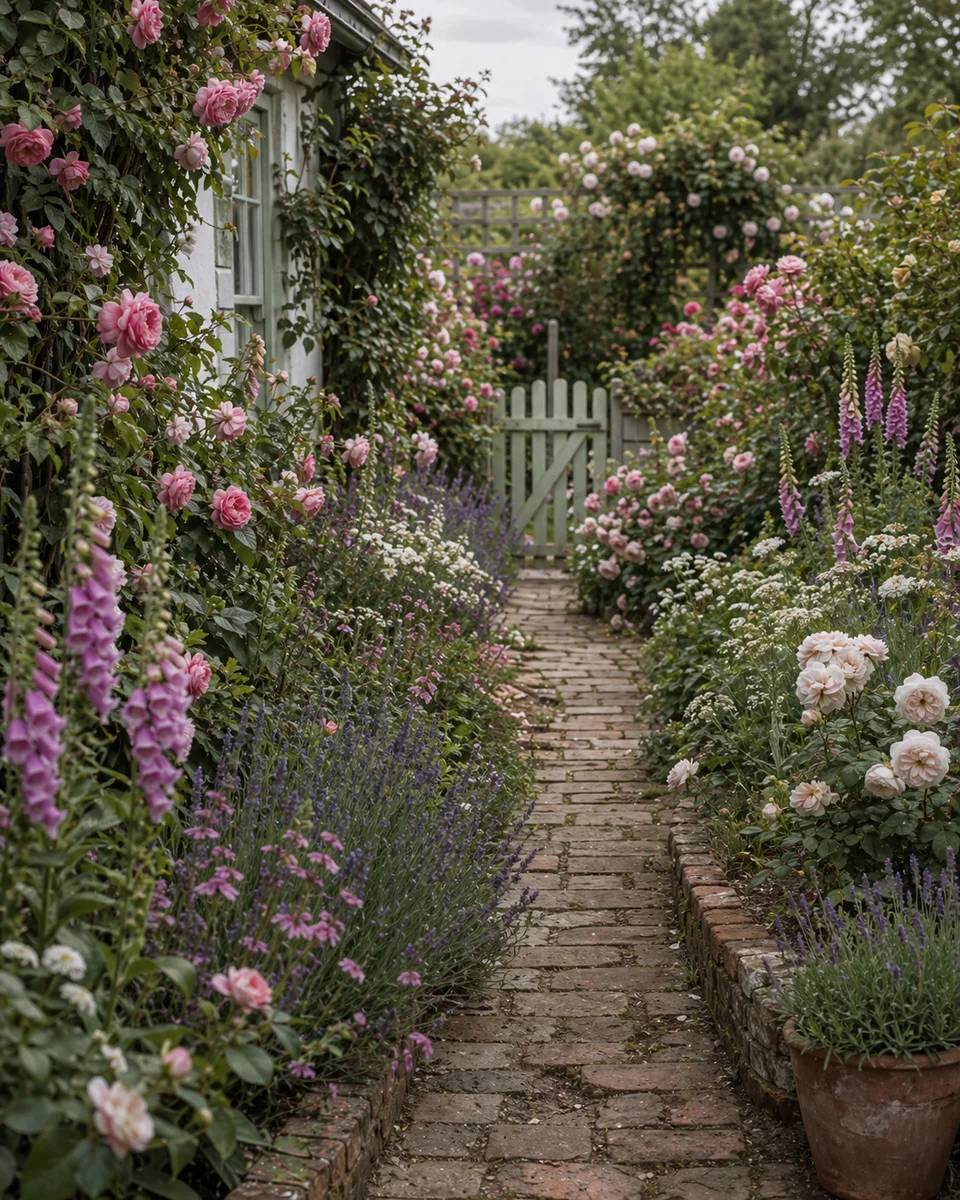
Overflowing borders, a winding path, and climbing roses turn a narrow side yard into the most charming walk on your entire property.
Why It Works
Cottage gardens thrive on intimacy, and side yards deliver exactly that. The close quarters mean fragrant plants are smelled at arm length. The linear shape creates a journey. Cottage style forgives tight spacing and slight chaos, which is precisely what a narrow side yard produces naturally.
Best for
- side yards where service path width and vertical planting are the real constraints
- people committing to layered perennials, soft edges, succession bloom
- people who will water through establishment season
Skip if
- you will not check narrow light corridors and privacy from neighbors before buying plants
- you want one mow-and-done lawn with zero flowering maintenance
Common mistakes
For a cottage side yard, the usual miss is no structure plants so winter looks empty and summer is a tangle. People also ignore narrow light corridors and privacy from neighbors and end up with planting that turns the side into an unwalkable jungle. Names like gravel, rose only work when massed with intent — not one of each from the nursery cart.
Plan this first
Keep a clear service path, then use walls and fences as the planting surface. Sketch a path and one seating pocket, then plant in drifts of 3–5. Preview that massing in Arden from the main viewing angle before you buy gravel, rose.
How to Achieve This Look
Lay a winding gravel or stepping-stone path down the center. Plant borders on both sides with a layered mix: tall hollyhocks and foxgloves against the fences, mid-height roses and peonies, and low edging plants spilling onto the path. Train a climbing rose or jasmine on each fence.
Try It with AI
Arden renders your side yard as a blooming cottage corridor, showing how layered flowers, climbing roses, and a winding path transform the space.
“Redesigned the whole backyard before I bought a single plant. Saved me from a couple of bad calls.”
Frequently Asked Questions
01 How wide does a side yard need to be for a cottage garden?
Four feet is the minimum. Six feet or more allows generous planting beds.
02 Which cottage plants handle partial shade?
Foxglove, astilbe, bleeding heart, ferns, and hostas all thrive in partial shade.
03 How do I keep a cottage side yard from looking messy?
A defined path provides structure. Repeat key plants every few feet for rhythm. Deadhead weekly.