Arden
A Proper English Cottage Garden in Your Backyard
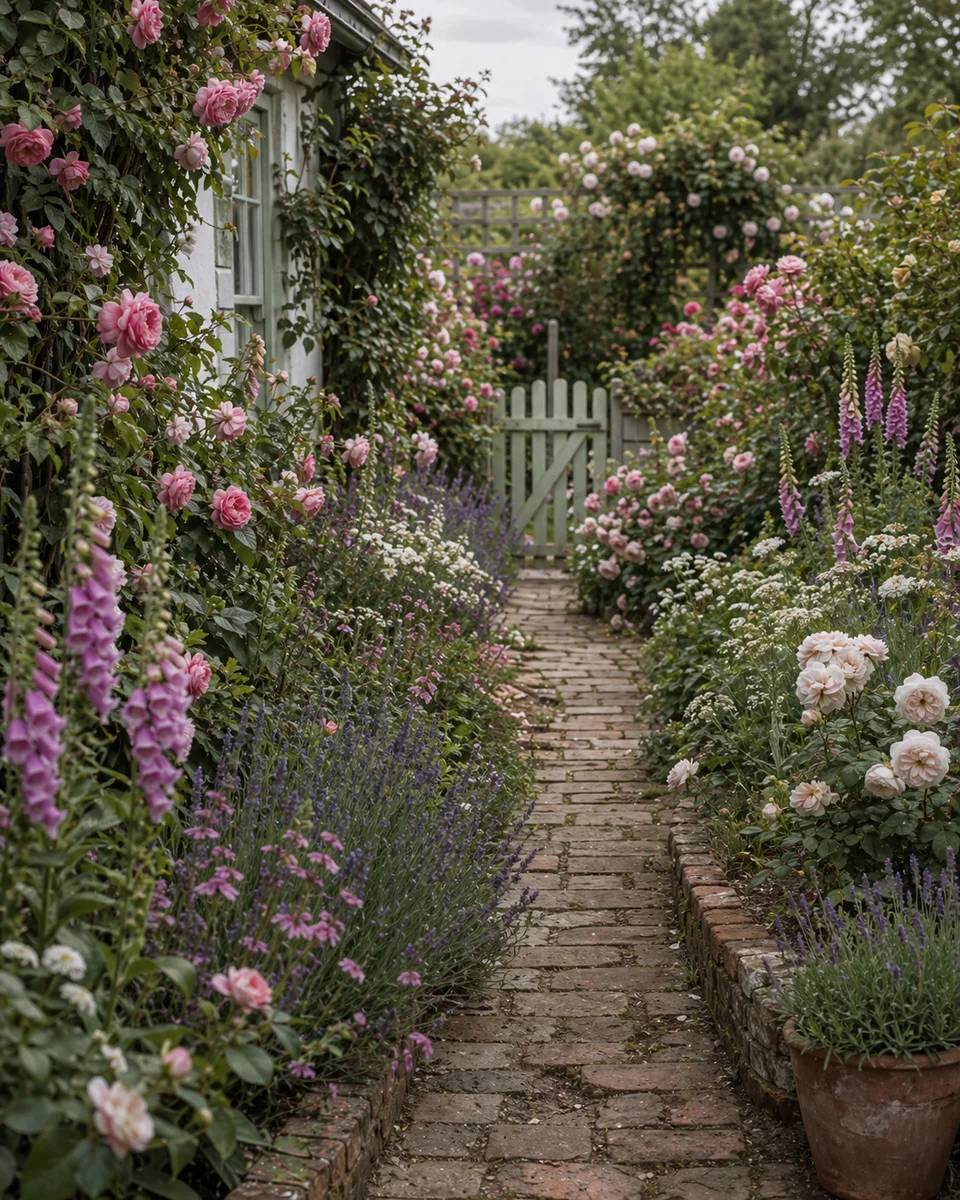
Herbaceous borders, climbing roses over brick walls, and a kitchen patch for herbs — bring the romance of the English countryside home.
Why It Works
The English cottage garden is the original template for abundant, mixed planting — a tradition stretching back to Tudor-era kitchen gardens that combined beauty with utility. What distinguishes it from a generic cottage garden is the emphasis on herbaceous borders with classic English perennials, the integration of edible plants among ornamentals, and the structured informality of clipped box hedging framing loose, flowing planting. A backyard provides the depth for proper double borders and room for a small kitchen garden section — the hallmarks of the style.
Best for
- backyards where seating, paths, and a mow/edge plan are the real constraints
- people committing to deep borders, planned color, climbing roses on structure
- people who will water through establishment season
Skip if
- you will not check how much of the day the main sitting area actually gets sun before buying plants
- you want a one-weekend plant-and-forget bed with no dividing or staking
Common mistakes
For a English cottage backyard, the usual miss is a folk jumble with no massing, no winter bones, and no color sequence. People also ignore how much of the day the main sitting area actually gets sun and end up with a floating patio with no planting edge or shade strategy. Names like gravel, rose only work when massed with intent — not one of each from the nursery cart.
Plan this first
Size the sitting pad and one path from the house before the plant shopping trip. Set the border depth and one color season, then plant in drifts — not a receipt of singles. Preview that massing in Arden from the main viewing angle before you buy gravel, rose.
How to Achieve This Look
Create deep herbaceous borders (at least 6 feet wide) along the back fence. Plant in drifts: delphiniums, lupins, and hollyhocks for height; English roses (David Austin varieties like "Gertrude Jekyll" and "The Generous Gardener"), peonies, and phlox for the middle; and lady's mantle, hardy geraniums, and catmint for edging. Edge borders with low clipped box or yew hedging. Add a brick or gravel path down the center. Dedicate a sunny corner to a raised-bed kitchen garden with runner beans, courgettes, and cutting flowers. Train a rambling rose over an arch.
Try It with AI
Show Arden your backyard and see it reimagined with deep herbaceous borders, a kitchen garden corner, and rose arches — all rendered in the soft color palette of an English country garden. Compare border widths and plant mixes before breaking ground.
“Redesigned the whole backyard before I bought a single plant. Saved me from a couple of bad calls.”
Frequently Asked Questions
01 How is an English cottage garden different from a regular cottage garden?
An English cottage garden specifically emphasizes herbaceous perennial borders, traditional English plant varieties (roses, delphiniums, lupins), clipped box or yew hedging for structure, and often includes an edible kitchen-garden section. It is a more structured subset of the broader cottage-garden style.
02 What if I live outside the UK climate?
The English cottage style adapts globally. In warmer climates, swap delphiniums for salvias and peonies for gardenias. The design principles — layered borders, mixed planting, structured edges — work everywhere. Choose plants that thrive in your USDA zone.
03 Do I need a large backyard for English cottage garden borders?
Deep borders benefit from at least 4–6 feet of width, but you can create the effect in a narrower space by reducing the number of tiers. A single-depth border of roses, catmint, and alliums still reads unmistakably English.