Arden
The Quintessential English Cottage Garden
Step into the timeless world of English cottage gardening — where every season brings new layers of beauty.
Why It Works
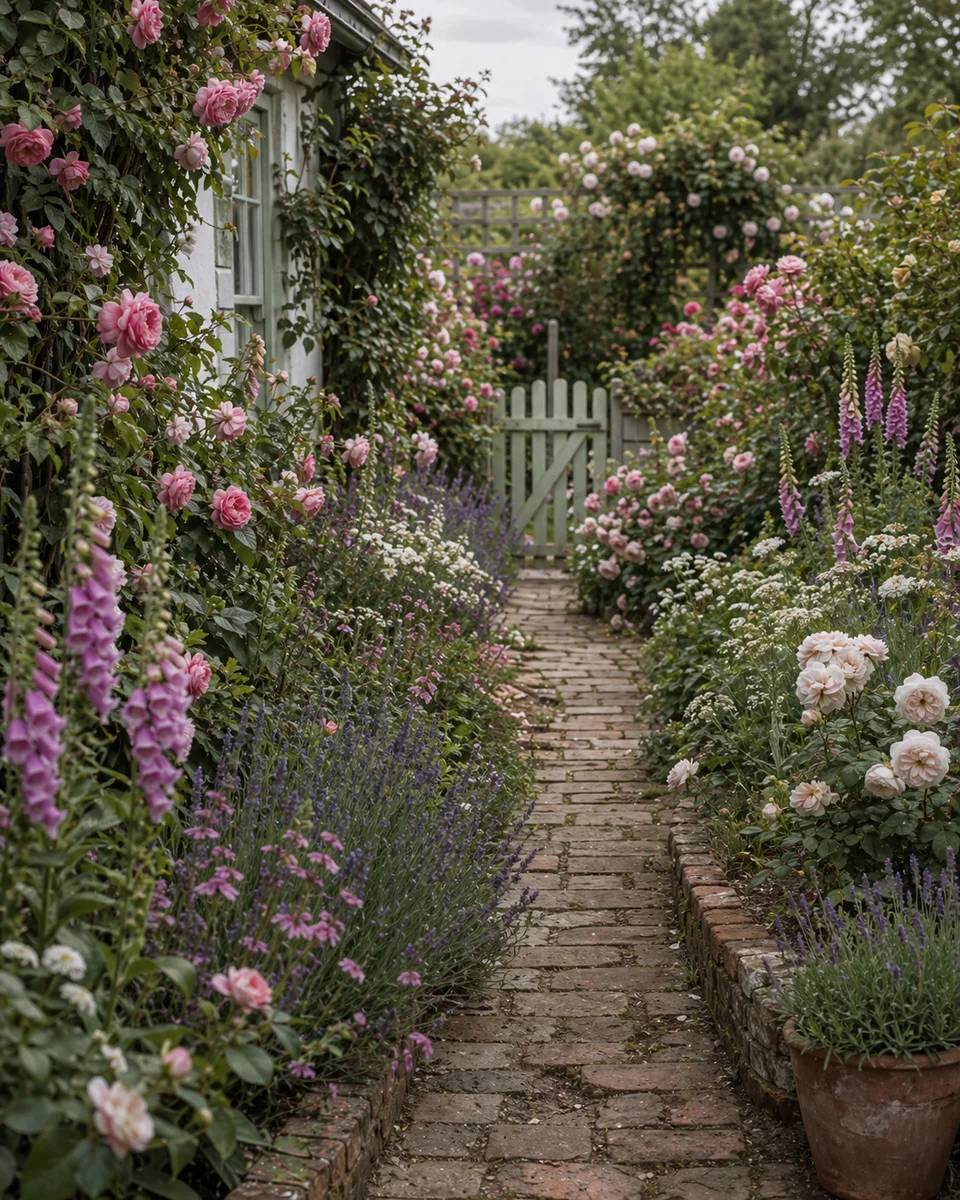
The English cottage garden reached its romantic peak in the late 19th century when garden designers like Gertrude Jekyll elevated humble village gardens into an art form. Jekyll pioneered the herbaceous border — long, deep beds of perennials arranged by height, color, and bloom sequence to create a tapestry effect that flows seamlessly from spring through autumn. The English interpretation adds a layer of sophistication to the rustic cottage tradition: climbing roses over brick walls, clipped box hedging to frame exuberant borders, and carefully planned color harmonies that appear effortlessly natural. The style celebrates England's temperate, rainy climate but translates surprisingly well to other regions with adaptation.
Best for
- gardens where paths, beds, and a maintenance rhythm you will keep are the real constraints
- people committing to deep borders, planned color, climbing roses on structure
- renters or owners who can change containers more easily than built-in beds
Skip if
- you will not check sun hours, wind, and the soil under the actual beds before buying plants
- you want a one-weekend plant-and-forget bed with no dividing or staking
Common mistakes
For a English cottage garden, the usual miss is a folk jumble with no massing, no winter bones, and no color sequence. People also ignore sun hours, wind, and the soil under the actual beds and end up with a plant collection with no path, water plan, or winter structure. Names like hedge, lavender, gravel only work when massed with intent — not one of each from the nursery cart.
Plan this first
Fix circulation and one viewing angle before the plant list. Set the border depth and one color season, then plant in drifts — not a receipt of singles. Preview that massing in Arden from the main viewing angle before you buy hedge, lavender, gravel.
How to Achieve This Look
Lay out deep herbaceous borders (at least 5 feet wide) backed by a wall, hedge, or fence. Plant in groups of 3–5, arranging by height: tall delphiniums, lupins, and verbascum at the back; mid-height roses, penstemon, and astrantia in the middle; low hardy geraniums, alchemilla, and dianthus at the front. Use a limited color palette per border section — silvers and pinks in one area, blues and purples in another. Frame beds with low box hedging or lavender edging. Add climbing roses (David Austin varieties) and clematis on walls. Include a proper lawn or gravel path between borders. The English approach emphasizes repeated plantings and seasonal continuity over the American cottage tendency toward eclectic variety.
Try It with AI
Visualize deep herbaceous borders along your fence line or driveway. Arden shows you how climbing roses will look on your actual walls and how different border color schemes — cool blues versus warm apricots — transform the feel of your outdoor space.
“I showed my landscaper the preview and we agreed on a plan in one meeting instead of three.”
Frequently Asked Questions
01 What is the difference between a cottage garden and an English cottage garden?
A cottage garden is a broad style mixing flowers, herbs, and vegetables informally. An English cottage garden specifically emphasizes herbaceous borders, climbing roses, box hedging, and carefully planned color harmonies — it is more refined while keeping the romantic spirit.
02 What are the essential English cottage garden plants?
Climbing roses (especially David Austin), delphiniums, lupins, foxgloves, lavender, peonies, hardy geraniums, alchemilla mollis, box hedging, and clematis form the backbone. Add sweet peas, hollyhocks, and aquilegia for seasonal interest.
03 Can I grow an English cottage garden in the US?
Absolutely. USDA zones 5–8 are ideal. In warmer zones, substitute heat-tolerant perennials and choose disease-resistant rose varieties. The design principles — deep borders, layered heights, color harmonies — work anywhere.
04 How much sun does an English cottage garden need?
Most classic English cottage plants need 6+ hours of direct sun. In partial shade, shift to shade-tolerant alternatives: astilbe, hellebores, hostas, ferns, and climbing hydrangea. The style still works beautifully in dappled light.